

Common Registration Mistakes When Using Invata Africa for Ghana Company Formation
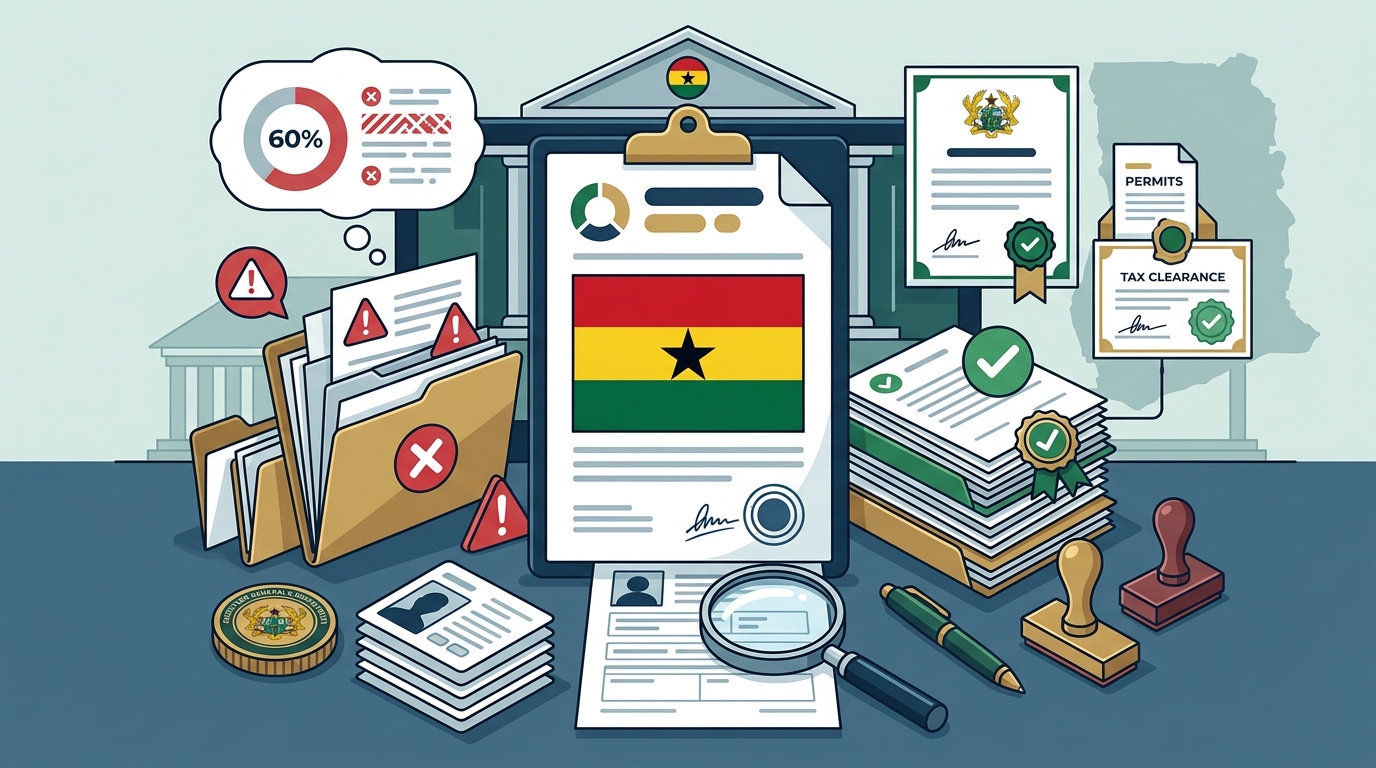
Establishing a corporate entity in Ghana requires navigating the Registrar General's Department (RGD) with precision. Recent regulatory updates indicate that over 60% of initial company registration rejections stem from avoidable documentation errors rather than substantive business flaws. According to data from the Ghana Investment Promotion Centre, accurate compliance during the incorporation phase is critical for securing foreign investment permits and tax clearance certificates. This guide details the most frequent pitfalls entrepreneurs encounter when utilizing Invata Africa for Ghana company formation and provides actionable strategies to ensure a seamless approval process. (Contact Us)
Mistake 1: Inadequate Company Name Selection
One of the most common errors occurs during the initial name reservation phase. Entrepreneurs often select names that are too similar to existing entities or contain restricted keywords. The Registrar General's Department maintains a strict database of prohibited terms. If your proposed name conflicts with an existing trademark or registered entity, the application will be rejected immediately.
When using Invata Africa for Ghana company formation, it is essential to conduct a thorough name search before submission. The platform facilitates this by allowing users to check availability against the national registry in real-time. You should prepare at least three alternative names in order of preference. This strategy ensures that if your first choice is unavailable, you can proceed with a backup option without delaying the entire process.
Additionally, avoid using generic terms that do not clearly describe your business activity. Names like "Ghana Trading Company" may be rejected for being too descriptive or lacking distinctiveness. Instead, opt for unique identifiers that enhance brand recognition. For more insights on branding strategies, you can explore resources from Forbes Business Council.
Mistake 2: Incorrect Director and Shareholder Data
Accuracy in personal identification is paramount. A frequent mistake is providing incomplete or incorrect details for directors and shareholders. This includes misspelled names, incorrect passport numbers, or outdated residential addresses. The RGD requires exact matches with official government-issued identification documents.
Foreign directors must provide notarized copies of their passports and proof of residential address. Local directors require their Ghana Card or national ID. Any discrepancy between the submitted data and the supporting documents will result in a request for clarification, which can delay incorporation by weeks. Invata Africa streamlines this by providing a structured data entry interface that validates inputs against standard formats.
Furthermore, ensure that the share capital structure is clearly defined. Ghanaian law requires a minimum paid-up capital for certain types of businesses, particularly those involving foreign investment. According to the Ghana Investment Promotion Centre, foreign investors must meet specific capital thresholds depending on the sector. You can verify current requirements at GIPC Official Website.
Mistake 3: Neglecting Registered Office Requirements
Every company incorporated in Ghana must have a registered office address. This address serves as the official point of contact for legal notices and government correspondence. A common error is using a P.O. Box as the registered address, which is not permitted for corporate entities.
The registered office must be a physical location where documents can be served. If you do not have a physical office in Ghana, you can utilize a virtual office service or a registered agent. Invata Africa offers compliant registered office solutions that ensure your company meets this legal requirement without the need for immediate physical infrastructure. This is particularly beneficial for foreign entrepreneurs who are establishing a presence in West Africa.
Ensure that the address provided is accurate and up-to-date. Any changes to the registered office must be reported to the Registrar General's Department within 14 days. Failure to do so can result in penalties and legal complications. For more information on corporate governance standards, refer to World Bank Ghana.
Mistake 4: Overlooking Tax Registration Timelines
Incorporation is only the first step. Companies must register with the Ghana Revenue Authority (GRA) to obtain a Tax Identification Number (TIN). A significant mistake is delaying this registration until after operations begin. By law, companies must register for tax purposes within 30 days of incorporation.
The TIN is required for opening corporate bank accounts, signing contracts, and filing annual returns. Without a TIN, your company cannot operate legally in the financial sector. Invata Africa assists clients by guiding them through the GRA registration process, ensuring that all necessary forms are completed correctly and submitted on time.
Additionally, be aware of the different tax obligations that apply to your business structure. Corporate income tax, value-added tax (VAT), and withholding tax are just a few of the levies you may encounter. Understanding these obligations early helps in financial planning and avoids unexpected liabilities. For detailed tax guidelines, consult Ghana Revenue Authority.
Mistake 5: Failing to Prepare for Post-Incorporation Compliance
Many entrepreneurs focus solely on the incorporation process and neglect post-incorporation requirements. This includes filing annual returns, maintaining statutory registers, and holding mandatory board meetings. Failure to comply with these ongoing obligations can lead to the company being struck off the register.
Annual returns must be filed with the Registrar General's Department within 42 days after the company's anniversary of incorporation. These returns update the registry with current director and shareholder information. Invata Africa provides ongoing compliance support to ensure that your company remains in good standing. This includes reminders for filing deadlines and assistance with document preparation.
Statutory registers, such as the register of members and the register of directors, must be kept at the registered office. These documents provide a legal record of the company's ownership and management structure. Regular audits of these registers help prevent discrepancies and ensure transparency. For best practices in corporate compliance, see ICMA Guidelines.
Comparison of Registration Service Options
| Feature | DIY Registration | Invata Africa Service | Traditional Law Firm |
|---|---|---|---|
| Cost Efficiency | Low upfront cost | Transparent fixed fees | High hourly rates |
| Speed of Processing | Slow, prone to delays | Expedited processing | Moderate |
| Compliance Support | None | Ongoing monitoring | Limited post-filing |
| Expert Guidance | Self-research required | Dedicated account manager | Legal counsel access |
Key Takeaways
- Prepare at least three alternative company names to avoid rejection due to conflicts.
- Ensure all director and shareholder details match official government-issued IDs exactly.
- A registered office must be a physical address, not a P.O. Box.
- Register for a Tax Identification Number (TIN) within 30 days of incorporation.
- File annual returns with the Registrar General's Department within 42 days of the anniversary.
- Utilize Invata Africa for streamlined name reservation and compliance monitoring.
- Understand sector-specific capital requirements via the Ghana Investment Promotion Centre.
Frequently Asked Questions
How long does it take to register a company in Ghana?
Typically, the incorporation process takes between 5 to 10 business days if all documents are submitted correctly. Delays often occur due to name conflicts or incomplete documentation.
Can foreigners own 100% of a Ghanaian company?
Yes, foreigners can own 100% of a Ghanaian company. However, certain sectors may require local partnership or specific investment permits from the Ghana Investment Promotion Centre.
What is the minimum share capital required?
The minimum share capital varies by business type. For standard private limited companies, there is no strict minimum, but foreign investors must meet specific thresholds based on their investment amount.
Do I need a local director for my Ghanaian company?
It is highly recommended to have at least one local director to facilitate compliance and communication with local authorities. Invata Africa can provide registered agent services to assist with this.
How do I obtain a Tax Identification Number (TIN)?
A TIN is obtained by registering with the Ghana Revenue Authority (GRA). This can be done online or through a tax consultant. Invata Africa assists clients in this process.
What happens if I miss the annual return filing deadline?
Missing the deadline can result in penalties and the company being struck off the register. It is crucial to file annual returns within 42 days of the company's anniversary.
Can Invata Africa help with bank account opening?
Yes, Invata Africa provides guidance on opening corporate bank accounts in Ghana, including assistance with required documentation and bank selection.
Start Your Ghana Company Formation Today
Avoid the common pitfalls of Ghana company formation by partnering with experts who understand the local regulatory landscape. Invata Africa offers comprehensive services to guide you through every step of the process, from name reservation to post-incorporation compliance. Ensure your business is built on a solid foundation by choosing a reliable partner. Explore our service packages to find the right solution for your needs. View our jurisdiction coverage to see how we can support your expansion across Africa. Contact Invata Africa to begin your journey with confidence.